
A BAS is a tax reporting form used by the Australian Taxation Office (ATO) that allows businesses to report and pay taxes such as GST, PAYG withholding, and PAYG instalments.
The business activity statement helps businesses report tax obligations for a specific period, usually monthly or quarterly, depending on their turnover and reporting requirements.
Businesses that register for GST will generally need to lodge a BAS with the ATO. Lodging your BAS ensures your business reports the correct amount of tax collected on sales and paid on business expenses.
What is a BAS used for?
A BAS allows businesses to report several tax obligations to the Australian Taxation Office in a single form. Instead of submitting separate reports, businesses use BAS lodgement to report taxes connected to their operations. Maintaining accurate financial records through bookkeeping services can make BAS preparation much easier for many businesses.
Common taxes reported in a BAS include:
Who needs to lodge a BAS in Australia?
You will usually need to lodge a BAS if your business is registered for GST. The BAS ensures that businesses report GST and other tax obligations correctly to the Australian Taxation Office.
Once registered, businesses must submit a BAS for each reporting period, even if they have not made any sales during that time. This requirement ensures the ATO receives regular updates on a business’s tax position.
Businesses required to lodge a BAS
Businesses generally need to lodge a BAS once they register for GST with the Australian Taxation Office. GST registration is required when annual turnover reaches $75,000 for sole traders and partnerships.
For companies, other entities, and non-profit organisations, GST registration is required once annual turnover reaches $150,000. Businesses that employ staff and report PAYG withholding may also need to lodge a BAS regularly.
Voluntary GST registration
Some businesses voluntarily register for GST, even if their turnover is below the threshold.
If you voluntarily register, you still need to lodge a BAS return in Australia and report GST for each reporting period.
When is BAS due in Australia?
Keeping track of when BAS is due is important so businesses stay compliant and avoid penalties. Most small businesses lodge their BAS quarterly, although some businesses report monthly depending on turnover. The following BAS quarterly due dates outline the standard reporting schedule for businesses that lodge directly with the ATO.
BAS quarterly due dates
These BAS quarterly due dates apply when businesses lodge a BAS directly with the ATO.
Businesses that lodge their BAS through a registered tax or BAS agent may receive extended lodgement deadlines under the ATO tax agent lodgement program. These extended dates are typically later than the standard ATO deadlines and can vary depending on the agent’s lodgement schedule and whether the BAS is submitted electronically.
Monthly BAS reporting
Businesses with a GST turnover of $20 million or more are generally required to report monthly. In some cases, the ATO may also require businesses below this threshold to report monthly, depending on their tax circumstances.
For example:
- July BAS due 21 August
- August BAS due 21 September
More frequent reporting ensures large businesses report GST regularly and remain up to date with tax obligations.
How to do BAS lodgement step by step
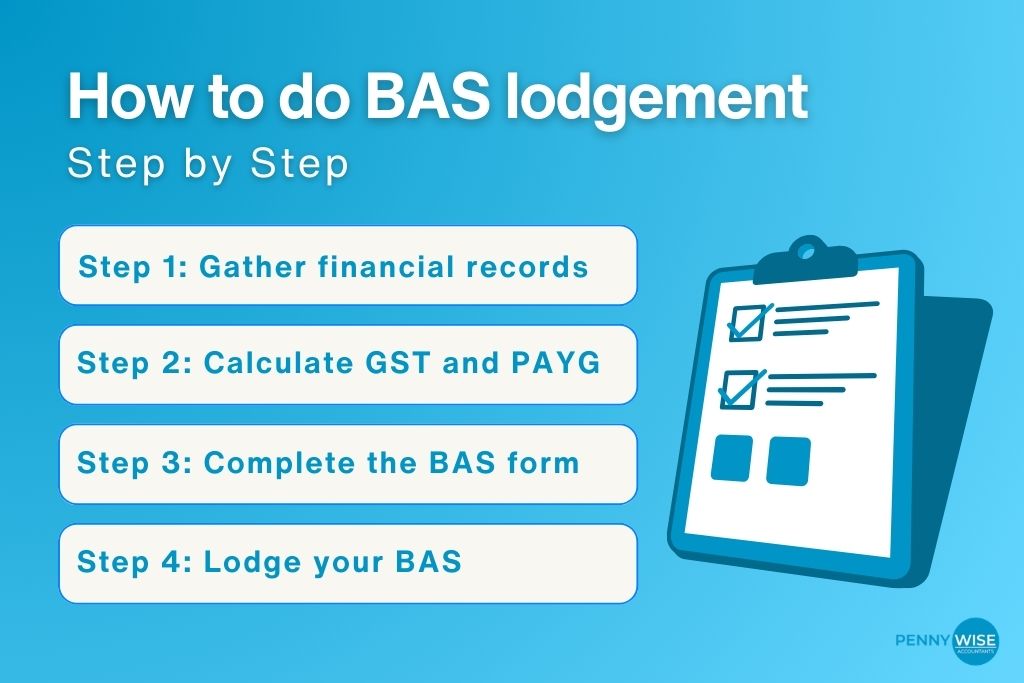
BAS lodgement involves calculating GST and PAYG amounts and submitting the statement to the ATO before the due date. Most businesses complete BAS using accounting software, ATO Online services for business, or a registered tax or BAS agent. The following steps outline the typical process businesses follow to prepare and lodge a BAS accurately.
Step 1: Gather financial records – Collect records of sales, purchases, payroll, and GST amounts for the reporting period.
Step 2: Calculate GST and PAYG – Determine the GST collected on sales and GST credits on purchases. Businesses with employees must also calculate PAYG withholding.
Step 3: Complete the BAS form – Enter your financial figures into the BAS form or digital activity statement.
Step 4: Lodge your BAS – Submit the statement through the ATO online portal, accounting software, or a BAS agent before the BAS due date.
How small businesses stay compliant with BAS
Maintaining organised financial records helps ensure accurate BAS lodgement and reduces the risk of errors. Clear and up-to-date records make it easier for businesses to track GST, PAYG withholding, and other reportable amounts during each reporting period. Good record-keeping also supports smoother BAS preparation and helps businesses stay compliant with ATO requirements.
Maintain accurate records
Businesses should keep records of invoices, receipts, payroll data, and GST-inclusive expenses. Accurate records support the figures reported in each BAS return.
Use accounting software or a BAS agent
Many businesses use accounting software to track GST and generate BAS reports automatically. Others work with a registered tax or BAS agent to manage BAS lodgement and ensure compliance with ATO requirements.
Understand BAS and keep your business tax compliant
Businesses in Australia use a Business Activity Statement (BAS) to report certain taxes to the Australian Taxation Office, including GST, PAYG withholding, and PAYG instalments. The statement covers a defined reporting period, usually monthly or quarterly.
Lodging BAS on time is important for both companies and sole traders to meet their tax obligations and avoid potential penalties.
At Pennywise Accountants, we regularly share guidance and resources to help Australian business owners better understand topics like BAS lodgement, BAS returns in Australia, and BAS quarterly due dates. You can explore more through our resources, where we explain common tax processes and BAS requirements relevant to Australian small businesses.
Frequently asked questions
How do you lodge a BAS online in Australia?
You can lodge a BAS online through ATO Online services for business, myGov, accounting software, or a registered tax or BAS agent. Online BAS lodgement helps streamline reporting and reduces calculation errors. Many accounting platforms also generate BAS reports automatically, making the process easier for small businesses.
Can you lodge a BAS yourself without an accountant?
Yes, small business owners can lodge their BAS themselves using the ATO’s online services or accounting software. You must ensure that GST, PAYG withholding, and other amounts are calculated correctly before submitting the BAS. Some businesses still choose to use a registered tax agent to reduce the risk of mistakes.
What happens if you miss a BAS due date in Australia?
If you miss a BAS due date, the ATO may apply a failure to lodge penalty depending on your business size. Interest charges can also apply if BAS payments are overdue. Businesses should lodge the statement as soon as possible and contact the ATO if they need assistance.
Can a BAS result in a refund from the ATO?
Yes, a BAS can result in a refund if your GST credits are higher than the GST collected on sales. This can happen when a business has high expenses or purchases equipment during a reporting period. After reviewing the BAS, the ATO may issue a refund for the difference.
Do sole traders need to lodge a BAS in Australia?
Sole traders must lodge a BAS if they are registered for GST with the Australian Taxation Office. Once registered, they must submit a BAS for each reporting period, even if they did not make sales. This requirement ensures that GST and other tax obligations are reported correctly.
What records should businesses keep for BAS reporting?
Businesses should keep records of sales invoices, purchase receipts, payroll details, and GST-inclusive expenses. Accurate records help ensure the GST and PAYG figures reported in the BAS are correct. Many businesses use accounting software to track these records automatically.
Can BAS reporting be done monthly instead of quarterly?
Yes, BAS reporting is generally monthly for businesses with a GST turnover of $20 million or more. In some cases, businesses below that threshold may also report monthly, either by choice or if the ATO requires it. Monthly BAS reporting helps businesses stay on top of tax obligations and manage cash flow more regularly.
What is the difference between a BAS and a business tax return in Australia?
A BAS reports taxes such as GST, PAYG withholding, and PAYG instalments during the year. A business tax return reports total income, expenses, and tax payable for the financial year. BAS reporting allows businesses to pay certain taxes progressively rather than in a single annual payment.


Get a personal consultation.
Call us today at 0405 667 350
Fast responses, clear advice, and tailored solutions for Sunbury individuals and small businesses.