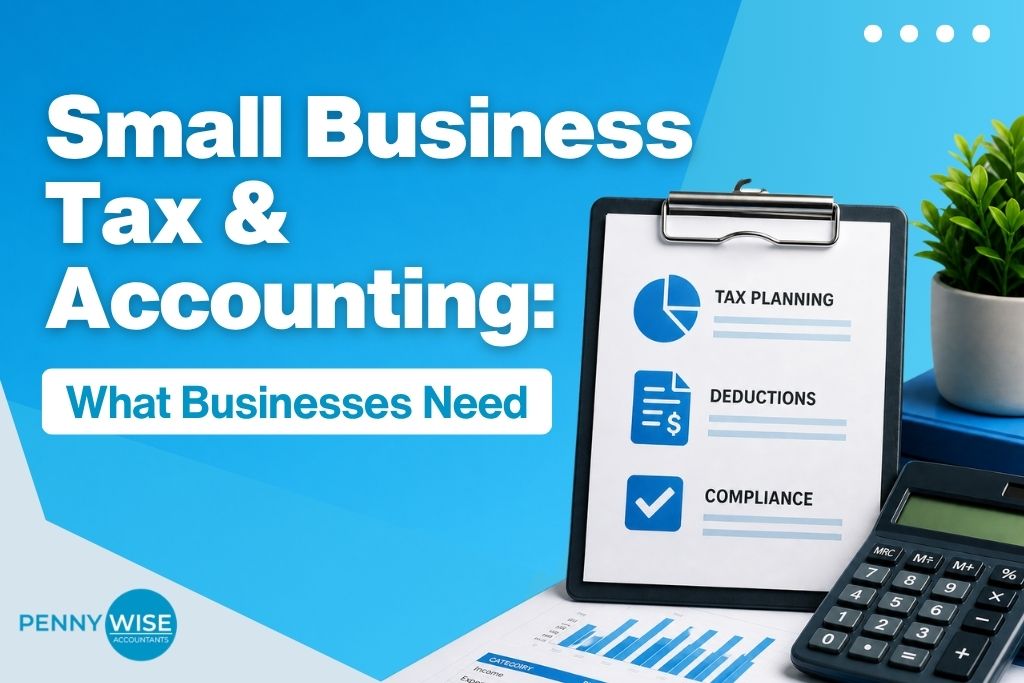
Between shifting tax laws and the pressure of the financial year, it is easy to feel overwhelmed. However, getting your accounting right does more than just keep the Australian Taxation Office (ATO) happy; it provides a clear picture of your cash flow and helps you make better business decisions.
What is the goal of small business tax accounting?
The primary goal of small business tax accounting is to track business income and expenses so you can meet your tax obligations and identify opportunities to save money.
Effective professional accounting helps support compliance with your tax obligations and helps identify eligible deductions that may reduce your tax.
How much tax does a small business pay in Australia?
The amount of tax you pay depends on how your business is set up and your annual turnover. For the 2025-2026 financial year, the ATO uses different thresholds for various benefits. Many small business concessions use a AUD $10 million aggregated turnover threshold, while some concessions, such as the lower company tax rate, use a AUD $50 million threshold.
If you operate as a company, you likely fall under the 25% company tax rate for Base Rate Entities. To qualify, your turnover must be under AUD $50 million and no more than 80% of your income can be passive (known as base rate entity passive income, such as interest, rent, or dividends). If you are a sole trader, your business income is added to your personal income and taxed at your individual marginal rate.
The Small Business Income Tax Offset
Individual sole trader setups and partners with an aggregated turnover of less than AUD $5 million may be eligible for the Small Business Income Tax Offset. This offset can reduce the tax you pay by up to AUD $1,000 each year. The ATO calculates this automatically based on the tax attributable to your business income, providing a direct reduction in the tax you owe.
Tax Comparison by Business Structure
Choosing the right setup is a critical decision that directly impacts your tax obligations, how income is taxed, and your level of asset protection. The table below compares the typical tax rates and primary benefits for the most common Australian business structures in the 2025-2026 financial year.
Trust tax outcomes depend on the trust deed, distributions, and specific advice from a registered tax professional.
Why professional tax accounting services matter
A small business tax accountant does much more than just fill out forms once a year. They help you understand your tax liabilities and identify deductions you may be eligible to claim. Professional tax accounting services provide oversight that can help keep your balance sheet and accounting records accurate, complete, and aligned with ATO requirements.
The value of an accountant for your small business
An expert can provide business tax advice that may help reduce avoidable tax costs. For example, they can help you navigate a change in structure. While moving from a sole trader to a company or trust is common as you grow, it can create Capital Gains Tax (CGT) issues or rollover complexities that require professional handling to avoid unexpected costs.
Beyond the business tax return, an accountant helps with proactive tax planning. This involves looking at your income before the financial year ends on 30 June to see if there are strategies to minimise tax, such as prepaying business expenses or contributing to superannuation.
Benefits of Expert Support
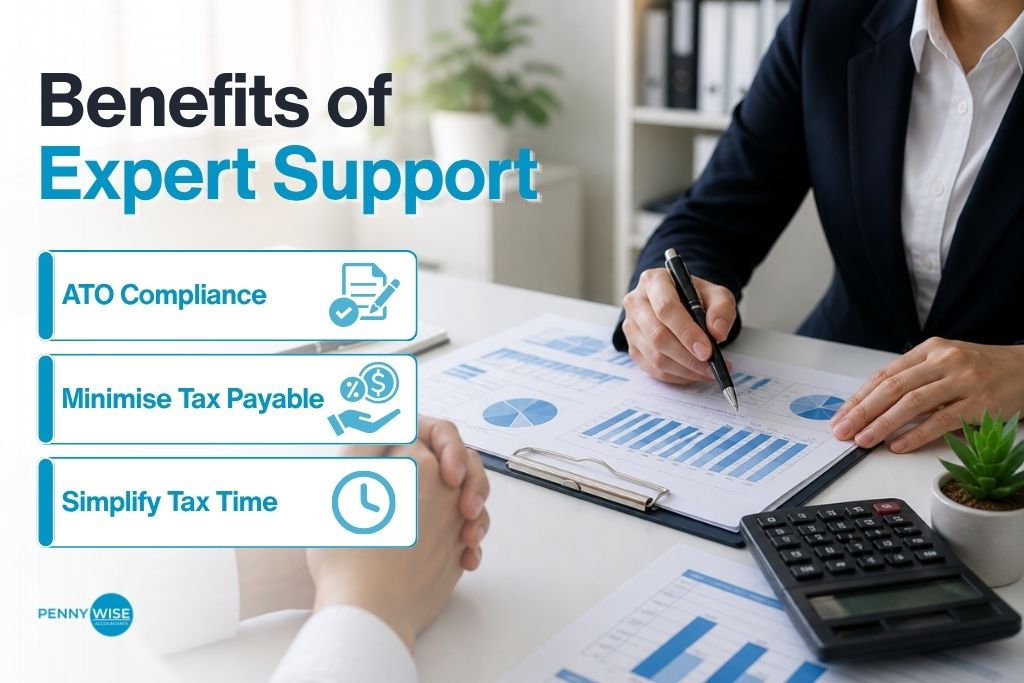
Working with a specialist allows you to move beyond basic bookkeeping and start using your finances as a growth tool. From helping you stay on top of ATO deadlines to identifying deductions you may otherwise overlook, professional oversight can provide greater clarity and confidence.
- ATO Compliance: Help reduce the risk of penalties by meeting ATO deadlines and tax requirements.
- Minimise Tax Payable: Identify tax-deductible items you may have missed, such as home office expenses or travel logs.
- Simplify Tax Time: Move away from manual entry and use accounting software to track business operations in real time.
How to simplify accounting for a small business
The secret to easy business accounting is automation. Using cloud accounting software allows you to link your business bank account directly to your records. This means you can see your cash flow at a glance and keep your bookkeeping up to date without hours of manual entry.
Choosing the right accounting software
Using online accounting tools gives you a real-time view of your finances. It allows you and your tax accountants to collaborate on the same data, making tax time much smoother and ensuring your annual business tax obligations are met without a last-minute rush. If you’re weighing up different platforms, understanding how options like Xero, MYOB, and QuickBooks compare can help you make a more informed decision.
Strategies to optimise your tax position
One powerful tool for eligible businesses with an aggregated turnover under AUD $10 million is the instant asset write-off. For the 2025–2026 income year, the ATO states that eligible small businesses using simplified depreciation may be able to immediately deduct the business portion of eligible assets costing less than AUD $20,000, provided those assets are first used or installed ready for use between 1 July 2025 and 30 June 2026. The AUD $20,000 limit applies on a per-asset basis, so multiple eligible assets may qualify.
For eligible businesses using simplified depreciation rules, assets costing AUD $20,000 or more are generally added to the small business pool and depreciated over time. If the closing balance of that pool is less than AUD $20,000 at the end of the 2025–2026 income year, you may be able to write off the full remaining balance. Working with a professional tax preparer can help you apply these rules correctly and maintain the records needed to support your claim.
Ensuring your business remains compliant
At Pennywise Accountants, we see small business accounting as a tool for your business success. We understand the complexities of business and the pressure small business owners face when trying to stay compliant while growing their brand.
Our approach is to provide the expert tax support you need to minimise your tax obligations through sound, professional tax advice. We offer a range of accounting services that go beyond the basic tax return, focusing instead on tax and accounting strategies that support your business operations all year round.
We believe that when your tax affairs are in order, you have the clarity needed to make better business decisions. Whether you need help with partnership tax, a company tax return, or general business tax accounting, we are here to ensure your business remains compliant and your financial future remains stable and well-managed.
Frequently asked questions
How do I register for GST if my business grows?
You must register for Goods and Services Tax (GST) within 21 days if your GST turnover reaches or is expected to reach AUD $75,000 or more. Registration can be completed once you have an ABN, including through the Australian Business Register and ATO online services. If you fail to register on time, the ATO may backdate your GST obligations to when you became required to register.
Can I claim home office expenses as a small business owner?
You may be able to claim home office expenses using either the fixed-rate method or the actual cost method. The ATO’s fixed-rate method is 70 cents per hour for the 2024–25 income year and covers running expenses such as energy, internet, phone usage, stationery, and computer consumables. Depreciation for eligible assets may be claimed separately.
How long must I keep my small business accounting records?
The ATO generally requires small businesses to keep most tax and superannuation records for five years from the date they were prepared or the transaction completed. Certain records, such as those relating to CGT assets, may need to be kept significantly longer depending on the law. Maintaining digital copies in cloud accounting software is an efficient way to meet these legal obligations.
What is the deadline for lodging a small business tax return?
If you are lodging your own tax return, the deadline is generally 31 October after the end of the financial year. If you use a registered tax agent, you may receive an extension under the ATO lodgment program, commonly to 15 May or in some cases 5 June, depending on your eligibility.
How does the superannuation guarantee change for employers in 2026?
The superannuation guarantee rate increased to 12% on 1 July 2025 and remains at this level throughout the 2025-2026 financial year. Employers must apply this rate to all salary and wages paid on or after this date to meet their legal obligations. Using automated payroll software ensures your contributions are calculated correctly and paid into employee funds by the quarterly deadlines.
Is it possible to change from a sole trader to a company?
Changing structure involves registering a new entity with the Australian Securities and Investments Commission (ASIC) and obtaining a fresh ABN. While this transition can offer a capped 25% tax rate and may improve asset structuring, it can also trigger CGT or rollover issues depending on the specific facts. You should seek professional advice before moving assets to ensure you do not incur unnecessary tax liabilities.
What is the instant asset write-off limit for 2026?
Eligible small businesses with an aggregated turnover of less than AUD $10 million may be able to access the AUD $20,000 instant asset write-off threshold for eligible assets first used or installed ready for use between 1 July 2025 and 30 June 2026. The ATO states this measure applies for 2025–26. Assets costing AUD $20,000 or more are generally added to a simplified depreciation pool. If the pool balance falls below the threshold, it may be written off in full, subject to current ATO rules.
Get a personal consultation.
Call us today at 0405 667 350
Fast responses, clear advice, and tailored solutions for Sunbury individuals and small businesses.